

How to Wash Graphic Tees Without Fading
Table of Contents
- Why Graphic Tees Fade and How to Prevent It
- Prepare Your Graphic Tees Before Washing
- How to Wash Graphic Tees in a Washing Machine
- Choose the Best Detergent for Graphic Tees
- How to Dry Graphic Tees Without Damaging the Print
- How to Prevent Graphic Tee Prints from Cracking
- Hand-Washing Your Graphic Tees for Maximum Protection
- Remove Stains Without Harming Your Graphic Tee
- Frequently Asked Questions
Last Updated: October 14, 2026
Why Graphic Tees Fade and How to Prevent It
Graphic tees fade because of how prints are applied and how fabric responds to heat, friction, and chemicals. Screen-printed designs sit on top of the fabric, while direct-to-garment prints absorb into the fibers. Both break down when exposed to hot water, harsh detergents, and the mechanical stress of washing machines.
No Grip Club knows this challenge well. Our motorsport-inspired clothing, featuring vintage racing designs and limited edition collections, celebrates the freedom and timeless spirit of automotive culture. When a print cracks or fades, you lose more than a shirt, you lose the story it tells. That's why understanding the science behind fading matters.

Fading happens in three main ways:
- Heat damage: Hot water weakens ink bonds and causes synthetic fibers to break down
- Chemical breakdown: Bleach and harsh detergents dissolve dyes and destroy print adhesion
- Friction wear: Repeated rubbing in the washing machine physically scrapes away layers of ink
The good news: most fading is preventable. By changing how you wash, dry, and store your graphic tees, you can keep prints looking sharp for years. The key is treating your tees like the quality pieces they are, because they are.
Prepare Your Graphic Tees Before Washing
Before your graphic tee touches water, take two simple steps that make a real difference: turn it inside out and check the care label.
Turning your tee inside out is the single most effective way to protect the print. When the graphic faces inward, the fabric exterior takes the friction during washing, not the printed design.
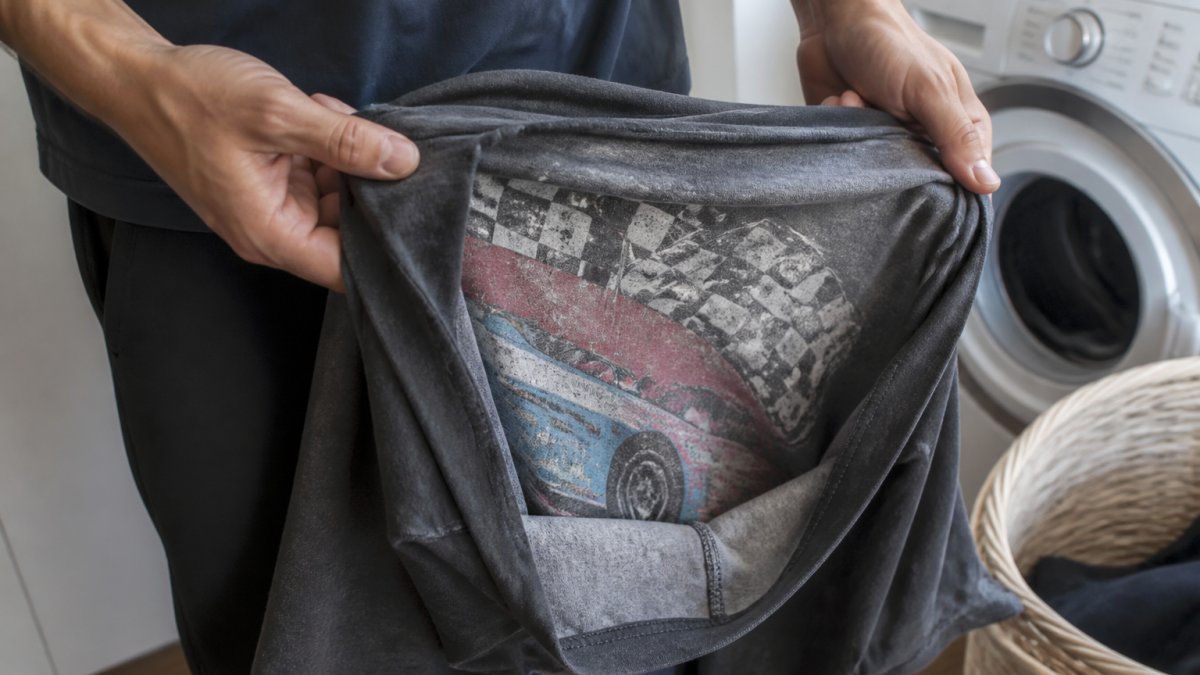
Check the care label for specific instructions about water temperature and cycle type. Different print methods have different tolerances. A label that says "cold water only" means the ink was applied in a way that won't survive heat. Respect that boundary.
Sort your laundry before washing:
- Separate dark, bright, and light-colored tees into different loads
- Keep graphic tees away from rough or heavy items like jeans or towels
- Wash graphic tees with similar colors to prevent dye transfer
- Use a mesh laundry bag for extra protection if washing with other items
This preparation step takes two minutes and prevents most damage. It's worth doing every time.
How to Wash Graphic Tees in a Washing Machine
The washing machine is where most damage happens. Follow these steps to keep your graphic tees safe:
Step 1: Use cold water
Cold water is non-negotiable for graphic tees. Hot or warm water accelerates fading and can cause prints to crack or peel. Cold water cleans just as well for most everyday dirt and sweat while protecting both the fabric and the print.
Step 2: Select a gentle or delicate cycle
The gentle cycle uses less agitation and shorter spin times. This means less mechanical stress on the fabric and print. Your tee gets clean without unnecessary wear. A standard or heavy cycle is too rough for graphic apparel.
Step 3: Reduce the load size
Don't overstuff the machine. Clothes need room to move freely without excessive friction. A smaller load means each item gets gentler treatment and better rinsing.
Step 4: Skip the fabric softener
Fabric softener leaves a coating that can trap moisture and weaken print adhesion over time. Your graphic tee doesn't need it, and it works against durability.
Your washing routine should look like this:
| Step | Action | Why It Matters |
|---|---|---|
| Turn inside out | Print faces inward | Protects design from direct friction |
| Cold water | 60°F or below | Prevents heat damage and fading |
| Gentle cycle | Low agitation | Reduces mechanical wear on fabric and print |
| Half load | Fewer items | Less rubbing between garments |
| No softener | Skip the additive | Maintains print adhesion and breathability |
Choose the Best Detergent for Graphic Tees
The detergent you use matters as much as the water temperature. A mild or color-safe detergent protects both the fabric and the print.
What to use:
- Color-safe detergent: Formulated to preserve dyes in colored fabrics. These are gentler than standard detergents and won't strip color from your tee or the print.
- Mild detergent: Look for products labeled "gentle" or "delicate." Avoid anything with bleach or brightening agents.
- Liquid detergent: Dissolves faster than powder and is less likely to leave residue on fabric.
What to avoid:
- Bleach: Destroys both fabric dyes and print inks. Never use it on graphic tees, even in small amounts.
- Oxygen bleach: Often marketed as "color-safe" but still too harsh for prints. Skip it.
- Heavy-duty detergent: Designed for tough stains and heavily soiled clothing. Too strong for everyday wear and graphic apparel.
- Detergent pods: Convenient but often concentrated. They can spot-bleach fabric if not fully dissolved before the tee enters the wash.
Use less detergent than you normally would. A graphic tee worn for a few hours doesn't need a full dose. Less soap means easier rinsing and less residue left on the fabric.
Many people assume that more detergent equals cleaner clothes. In reality, excess soap can dull colors and leave buildup that attracts dirt. For graphic tees, less is always better.
How to Dry Graphic Tees Without Damaging the Print
How you dry your graphic tee determines whether the print stays vibrant or starts to crack. Heat is the enemy. Air-drying is always the best choice.
Air-dry your tees:
- Hang on a clothesline or drying rack in a shaded area
- Avoid direct sunlight, which fades colors over time
- Let them dry completely before folding or wearing
- Takes 4-8 hours depending on humidity and air circulation
If you must use a dryer:
- Use the lowest heat setting available
- Dry for 20-30 minutes only, then remove and air-dry the rest
- Never use high heat or regular cycles on graphic tees
- Remove the tee while still slightly damp to prevent heat damage
Direct sunlight accelerates fading of both the fabric and the print. A shaded drying area protects your investment. If you're hanging tees outside, choose a spot under a roof overhang or tree cover.
NGC Vintage Racing | Baseball logo Unisex t-shirt →
Tumble drying with heat is hard on graphic tees. The combination of friction from tumbling and heat exposure causes prints to crack and peel faster than any other drying method. If you use a dryer, keep it short and cool.
How to Prevent Graphic Tee Prints from Cracking
Cracking happens when prints lose flexibility and become brittle. This occurs from repeated heat exposure, over-washing, and incorrect drying. Prevention starts with understanding what causes it.
Causes of cracking:
- Heat from hot water or high-heat dryers
- Excessive friction during washing or drying
- Low-quality print application that lacks flexibility
- Washing too frequently without proper care
Prevention strategies:
Wash less frequently. A graphic tee worn once doesn't need washing immediately. Spot-clean visible stains and wear it again. Most casual wear can go 2-3 times between washes.
Avoid folding your graphic tees along the print.
Store graphic tees flat or hanging, not crammed into a drawer. Pressure and compression weaken print adhesion over time.
When you do wash, follow the cold water and gentle cycle rules. These directly prevent the heat and friction that cause cracking.
Quality matters here too. When you invest in a well-made graphic tee, protect that investment with proper care.
Hand-Washing Your Graphic Tees for Maximum Protection
Hand-washing is the gentlest method and the best choice for your most valued pieces. It takes 10 minutes and gives you complete control over water temperature and agitation.
What you need:
- Cold water
- Mild or color-safe detergent
- A clean sink or basin
- A soft brush or cloth (optional, for stain removal)
Hand-washing steps:
- Fill a sink with cold water and add a small amount of detergent
- Submerge the tee and let it soak for 5-10 minutes
- Gently agitate the water with your hands, don't scrub or wring
- Drain the soapy water and refill with clean cold water
- Rinse by gently moving the tee through the water until soap is gone
- Squeeze out excess water gently, never wring or twist
- Lay flat or hang to air-dry in a shaded area
For stubborn stains, use a soft brush to gently work the detergent into the fabric before rinsing. Avoid scrubbing the print itself. Work on the back of the fabric if possible.
Hand-washing is especially important for vintage racing designs or limited-edition pieces where the print is a core part of the value. It's also the right choice if your tee's care label recommends hand-washing specifically.

This method works well for tees you wear frequently and want to last years. It's slower than machine washing but worth it for pieces that matter.
Remove Stains Without Harming Your Graphic Tee
Stains happen. How you treat them determines whether they come out or set permanently. The key is acting quickly and using the right approach.
For fresh stains:
- Blot the stain immediately with a clean cloth, don't rub
- Rinse with cold water from the back of the fabric (push the stain out, don't pull it through)
- Apply a small amount of mild detergent directly to the stain
- Let it sit for 10-15 minutes
- Gently work the detergent in with your fingers
- Rinse thoroughly with cold water
- Repeat if needed before washing normally
For set-in stains:
- Soak the tee in cold water with mild detergent for 30 minutes
- Gently work the detergent into the stain
- Rinse and repeat if necessary
- Hand-wash rather than machine-wash to control the process
Stains to avoid:
- Bleach or hydrogen peroxide, these will damage both the fabric and the print
- Hot water, sets stains and accelerates fading
- Rubbing or scrubbing, pushes the stain deeper into the fabric
A common mistake is treating a stain with hot water. Heat sets most stains permanently. Cold water is always the first step.
Never use bleach on a graphic tee. Even diluted bleach will lighten or destroy the print.
For wine, coffee, or food stains, cold water and mild detergent work well. For oil or grease, apply a tiny bit of dish soap before rinsing.
Washing graphic tees properly isn't complicated, but it does require intention. Turn them inside out, use cold water, choose a gentle cycle, and air-dry in shade.
At No Grip Club, we pour passion into every design. Grab a NGC Vintage Racing Baseball Logo Unisex T-Shirt or any of our limited-edition collections, and protect your piece with these proven techniques.
Frequently Asked Questions
Should you turn graphic tees inside out before washing?
Yes. Turning graphic tees inside out is one of the most effective ways to protect the print. This reduces direct friction between the printed design and the washing machine drum, minimizing cracking and peeling. The inside of the fabric experiences less agitation, keeping the print intact through multiple wash cycles. Always turn your graphic tee inside out before loading it into the washing machine.
What water temperature is best for washing graphic tees?
Cold water is ideal for graphic tees. Hot or warm water can cause colors to fade faster and may weaken the adhesive holding screen-printed designs in place. Cold water washing preserves both the fabric color and the print durability. If you need to wash heavily soiled items, cold water with a longer wash cycle works better than higher temperatures for protecting your graphic tee.
Is it better to air-dry graphic tees or use a dryer?
Air-drying is significantly better for graphic tees. Machine dryers generate heat and tumbling friction that can cause prints to crack, peel, and fade. Hang your graphic tee in a shaded area away from direct sunlight to dry naturally. If you must use a dryer, select the lowest heat setting, but air-drying will extend the life of both the fabric and the print substantially.
How often should you wash a graphic tee?
Wash graphic tees only when necessary, not after every wear. Frequent washing accelerates fading and print wear. Spot-clean minor stains and air out the shirt between wears. Reserve full washing for visible dirt or odors. Reducing wash frequency is one of the simplest ways to preserve the vibrant colors and crisp prints on your graphic tees, especially with vintage racing designs that define their character through bold, lasting visuals.